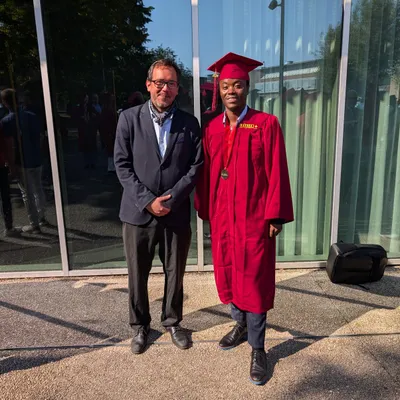
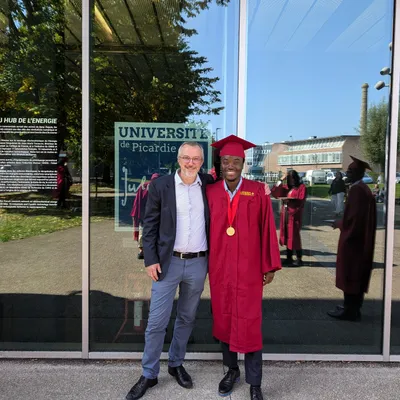
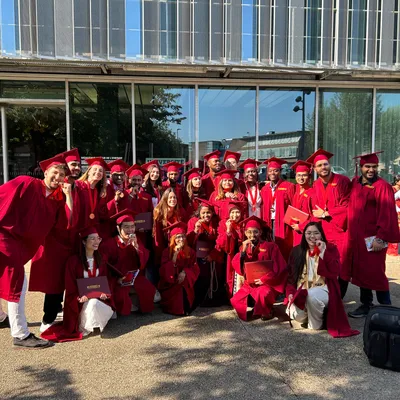
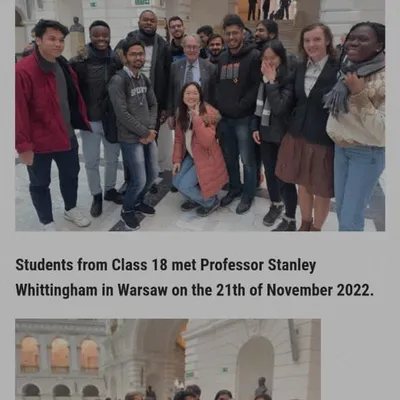
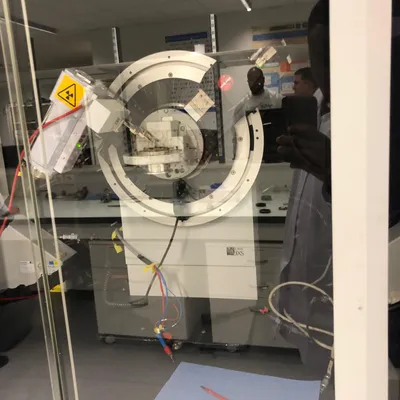
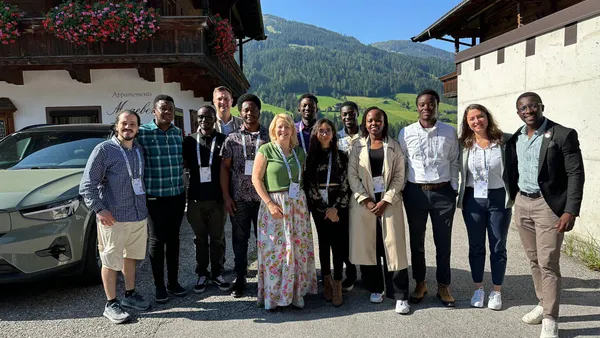
My MSc runs through MESC+, an Erasmus Mundus Joint Master's with mandatory mobility across three European universities: a semester at Warsaw University of Technology, a semester at Université Paul Sabatier Toulouse III, and the degree-awarding institution, Université de Picardie Jules Verne. Coursework covered solid-state chemistry, crystallography, and conductivity mechanisms in electrolytes, energy storage devices from supercapacitors to Li-ion and Na-ion cells, and characterization techniques including XRD, FTIR, DSC, EIS, PITT, GITT, and EQCM. During that first semester in Warsaw, our class attended a seminar by Prof. M. Stanley Whittingham, who won the 2019 Nobel Prize in Chemistry for his work on lithium-ion batteries: "The Electric Economy and Climate Change: The Critical Role of Energy Storage."
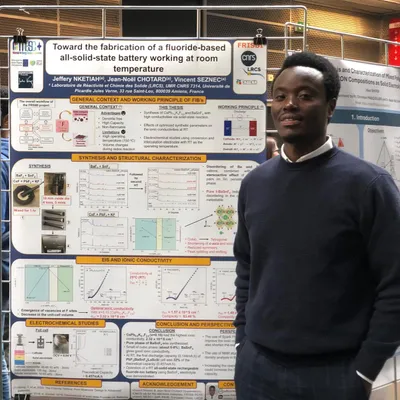
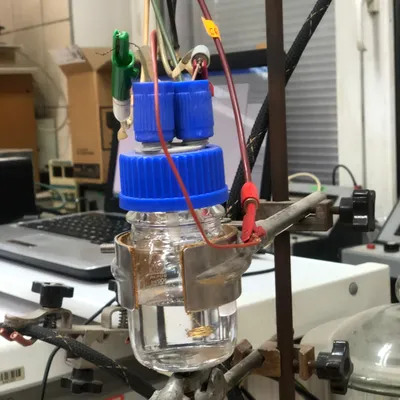
The thesis work happened at CNRS-LRCS in Amiens, under the PEPR FRISBI national programme: Toward the Fabrication of a Fluoride-Based All-Solid-State Battery Working at Room Temperature. Fluoride-ion cells swap lithium-ion's flammable liquid electrolyte for a solid fluoride conductor, which removes the fire risk and opens the door to higher energy density, but getting one to actually conduct at room temperature is the hard part.
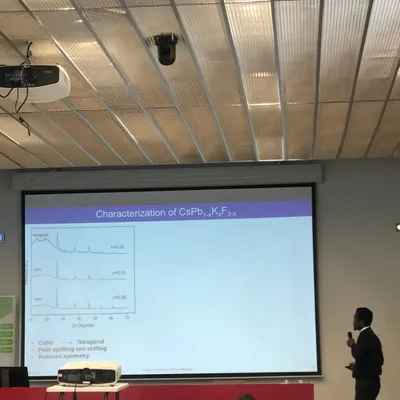
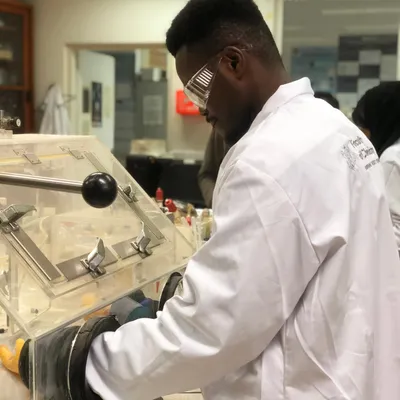
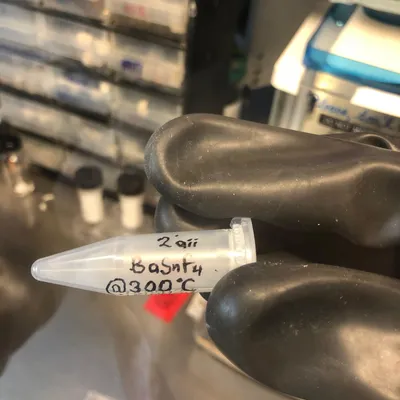
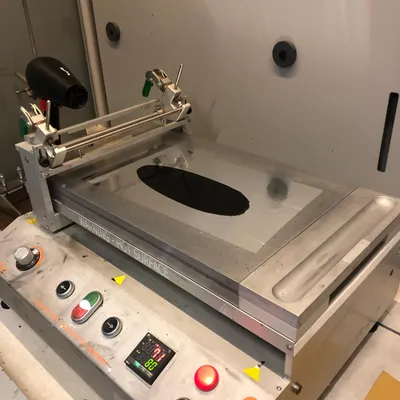
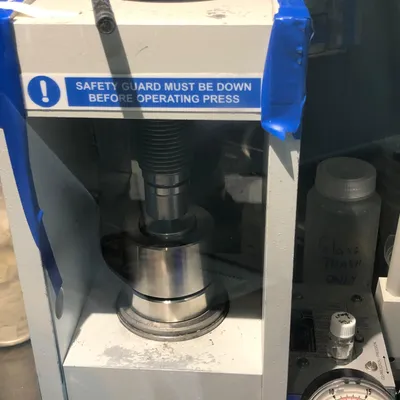
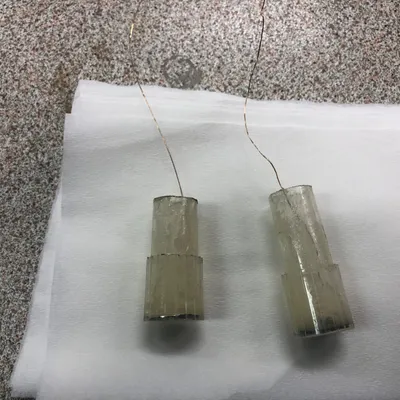
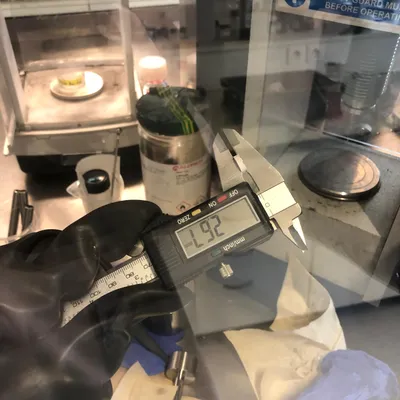
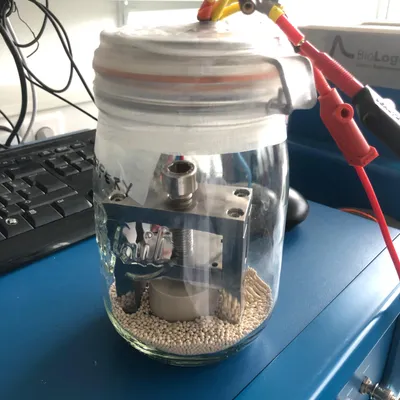
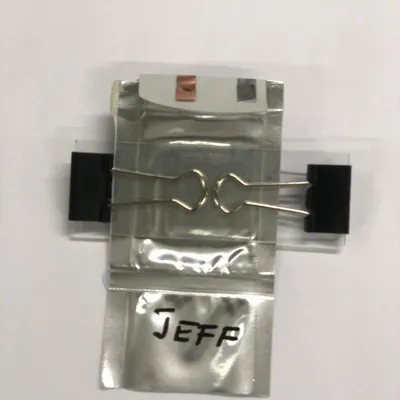
I synthesized the candidate solid electrolytes, BaSnF₄, PbSnF₄, and CsPb₁₋ₓKₓF₃₋ₓ, through solid-state reactions inside an argon glovebox, and got BaSnF₄ to an ionic conductivity of 10⁻⁴ S/cm at 25°C. XRD refinement confirmed the phase was 100% pure tetragonal BaSnF₄. From there I assembled full asymmetrical all-solid-state fluoride-ion cells using spark plasma sintering: a PbF₂/BaSnF₄/VGCF cathode composite against a LaScSi/BaSnF₄ anode composite. The result was a functional room-temperature prototype at 32% of theoretical capacity. I defended the thesis and presented the findings at LRCS Scientific Days.
Managing the multi-technique dataset behind all of this, matching XRD phase data against EIS conductivity numbers against TGA thermal profiles, turned into its own problem. It's a big part of why I ended up gravitating toward the data side of this work.